

Table of Contents
Dentists choose an inlay when damage is too extensive for a filling but too limited for a crown.
Told your cavity is too large for a standard filling but not large enough for a crown? There is a middle option. Dentists choose an inlay over a filling when a tooth needs more structural support than a direct restoration can provide. Inlays and onlays are custom restorations crafted in a lab and bonded precisely into the prepared tooth. Understanding when each option makes sense clarifies why the recommendation was made.
Key Takeaways
- An inlay is a lab-made restoration bonded into a tooth, unlike a filling shaped in place.
- Dentists choose inlays when decay is too extensive for a direct filling.
- Inlays strengthen the remaining tooth structure rather than weakening it.
- An onlay covers one or more cusps, while an inlay stays between them.
- Inlays typically require two visits but last considerably longer than fillings.
What Is an Inlay, Exactly?
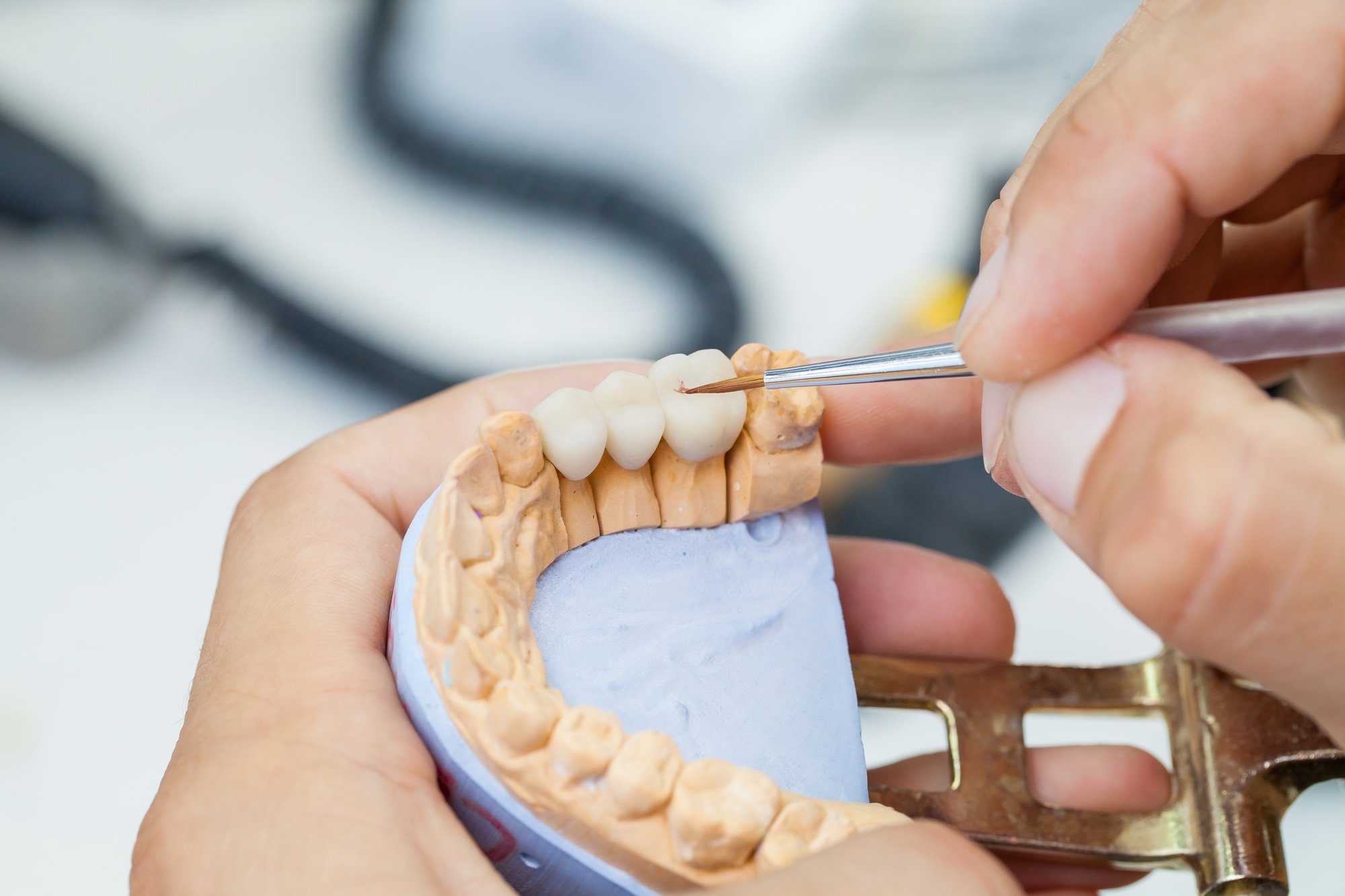
It is a precision-made restoration, not a paste shaped in your mouth. Answering what an inlay is starts with how it is built: an impression or digital scan of the prepared tooth goes to a lab, which fabricates a solid piece of porcelain, composite, or gold to fit the cavity exactly. The finished piece is then bonded into place with dental cement. Because the material is cured outside the mouth, it does not shrink the way direct composite can, which produces a tighter marginal seal. That precise fit is the entire reason the technique exists.
When Is an Inlay the Better Choice?
Size and location drive the decision. According to Colgate, fillings are appropriate for small cavities and require only one appointment, while inlays and onlays are for larger damaged areas and function as a middle ground between fillings and crowns. The inlay vs filling decision therefore turns on how much healthy tooth remains. A large direct filling can leave thin, unsupported walls that eventually fracture. An inlay distributes chewing forces more evenly across the tooth, which matters most on molars that absorb heavy load.
How Do Inlays Affect Tooth Strength?
This is where the difference becomes measurable. Large metal fillings can reduce a tooth’s strength, since the material occupies space without bonding meaningfully to the surrounding structure. Bonded porcelain and composite inlays work differently, adhering to the remaining tooth and reinforcing it. The result is a restoration that supports the tooth rather than merely occupying the void left by decay. For a molar already weakened by a previous restoration or a crack, that structural contribution is often the deciding factor in the recommendation.
What Is the Difference Between an Inlay and an Onlay?
The distinction is anatomical and straightforward. An inlay fits within the cusps, filling the grooved area at the center of the chewing surface. An onlay extends further, covering one or more of those raised cusps. Dentists select an onlay when damage reaches the biting edges, where an inlay would leave vulnerable structure exposed. Because an onlay covers more of the tooth, it is sometimes described as a partial crown, though it preserves considerably more natural tooth than a full crown would. Preserving healthy structure is the guiding principle behind both, and the choice between them is made once the decay is fully removed and the damage is visible.
What Should You Expect From the Process?
Plan on two appointments in most cases. At the first, the dentist removes decay and any old restoration, prepares the tooth, and takes an impression or digital scan. A temporary restoration protects the tooth while the lab fabricates the final piece, usually over one to two weeks. At the second visit, the temporary comes off, the inlay is seated, and the bite is checked and adjusted. Some practices with in-house milling can complete the process in a single visit. Either way, the tooth is numbed for preparation, and the temporary restoration lets you eat and speak normally in between.
Frequently Asked Questions
Is an inlay better than a filling?
For the right tooth, yes. Inlays handle larger damage, bond to the remaining structure, and typically last longer, though fillings remain the appropriate choice for small cavities.
How long do inlays last?
With good care, porcelain and composite inlays commonly last a decade or more, often outlasting comparable direct fillings.
Does getting an inlay hurt?
No. The tooth is numbed for the preparation appointment, and mild sensitivity for a day or two afterward is normal and temporary.
The Middle Ground That Makes Sense
Dentists choose an inlay over a filling when a tooth needs reinforcement that a direct restoration cannot deliver. The lab-made fit, the bond to remaining structure, and the durability all favor inlays for moderate damage. Inlays and onlays occupy a valuable space between a simple filling and a full crown, preserving natural tooth in the process. If a dentist has raised the option, the reasoning is usually about protecting what is left.
- If you want to learn more about when dentists choose an inlay over a filling, visit our Inlays & Onlays in Agoura Hills, CA, page or schedule a consultation.