

Glossary
Bone Grafting Glossary
Our glossary provides clear definitions of common bone grafting terms. Become a more informed patient at The Smile Spa.
Explore our dental dictionary to learn about common bone grafting
terms. If you have any other questions or would like to schedule an appointment, we would love to hear from you.
Types of Grafts
- Autograft: Bone taken from your own body, often from the chin, hip, or tibia (shinbone).
- Allograft: Bone taken from a cadaver (deceased donor).
- Xenograft: Bone taken from an animal, usually a cow.
- Alloplast: Synthetic bone graft material made from calcium phosphate or other biocompatible materials.
Reasons for Bone Grafting
- Bone Grafting for Dental Implants: To create a stable foundation for dental implants when there is insufficient jawbone.
- Periodontal Disease: To regenerate bone lost due to gum disease.
- Trauma or Injury: To repair bone defects caused by facial injuries or fractures.
- Cleft Lip and Palate: To repair bone defects in the mouth caused by cleft lip and palate.
- Sinus Lift: To increase bone height in the upper jaw for implant placement.
Grafting Procedures
- Guided Bone Regeneration (GBR): Using a membrane to guide bone growth and prevent soft tissue from interfering with the graft.
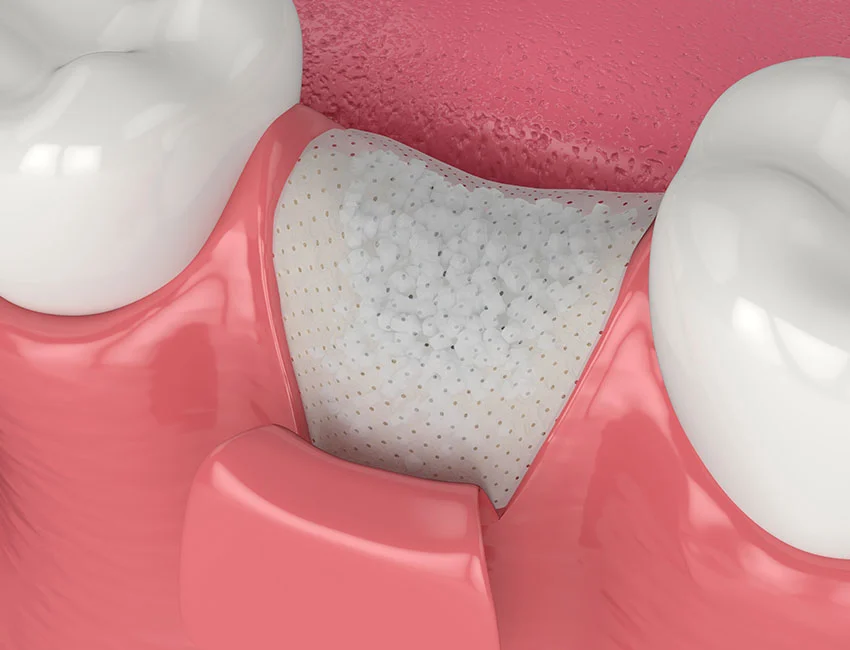
- Socket Preservation: Placing bone graft material into a tooth socket after extraction to prevent bone loss.
- Ridge Augmentation: Increasing the width or height of the jawbone to support implants.
- Block Graft: Using a solid piece of bone to fill a larger defect.
- Particulate Graft: Using small particles of bone to fill smaller defects.
Related Terms
- Biocompatibility: The ability of a material to function in the body without causing harm.
- Growth Factors: Proteins that stimulate bone growth and healing.
- Membrane: A barrier used to protect the graft and guide bone regeneration.
- Osseointegration: The process by which bone fuses with an implant.
- Resorption: The breakdown and loss of bone tissue.
- Autograft
- Bone taken from your own body, often from the chin, hip, or tibia (shinbone).
- Allograft
- Bone taken from a cadaver (deceased donor).
- Xenograft
- Bone taken from an animal, usually a cow.
- Alloplast
- Synthetic bone graft material made from calcium phosphate or other biocompatible materials.
- Bone Grafting for
- Dental Implants: To create a stable foundation for dental implants when there is insufficient jawbone.
- Periodontal Disease
- To regenerate bone lost due to gum disease.
- Trauma or Injury
- To repair bone defects caused by facial injuries or fractures.
- Cleft Lip and Palate
- To repair bone defects in the mouth caused by cleft lip and palate.
- Sinus Lift
- To increase bone height in the upper jaw for implant placement.
- Guided Bone Regeneration (GBR)
- Using a membrane to guide bone growth and prevent soft tissue from interfering with the graft.
- Socket Preservation
- Placing bone graft material into a tooth socket after extraction to prevent bone loss.
- Ridge Augmentation
- Increasing the width or height of the jawbone to support implants.
- Block Graft
- Using a solid piece of bone to fill a larger defect.
- Particulate Graft
- Using small particles of bone to fill smaller defects.
- Biocompatibility
- The ability of a material to function in the body without causing harm.
- Growth Factors
- Proteins that stimulate bone growth and healing.
- Membrane
- A barrier used to protect the graft and guide bone regeneration.
- Osseointegration
- The process by which bone fuses with an implant.
- Resorption
- The breakdown and loss of bone tissue.