

Glossary
Orthodontic Glossary
Our glossary provides clear definitions of common orthodontic terms. Become a more informed patient at The Smile Spa.
Explore our dental dictionary to learn about common Orthodontic terms. If you have any other questions or would like to schedule an appointment, we would love to hear from you.
Types of Appliances
- Braces: Fixed orthodontic appliances consisting of brackets, bands, and wires that are attached to the teeth to move them into proper alignment.
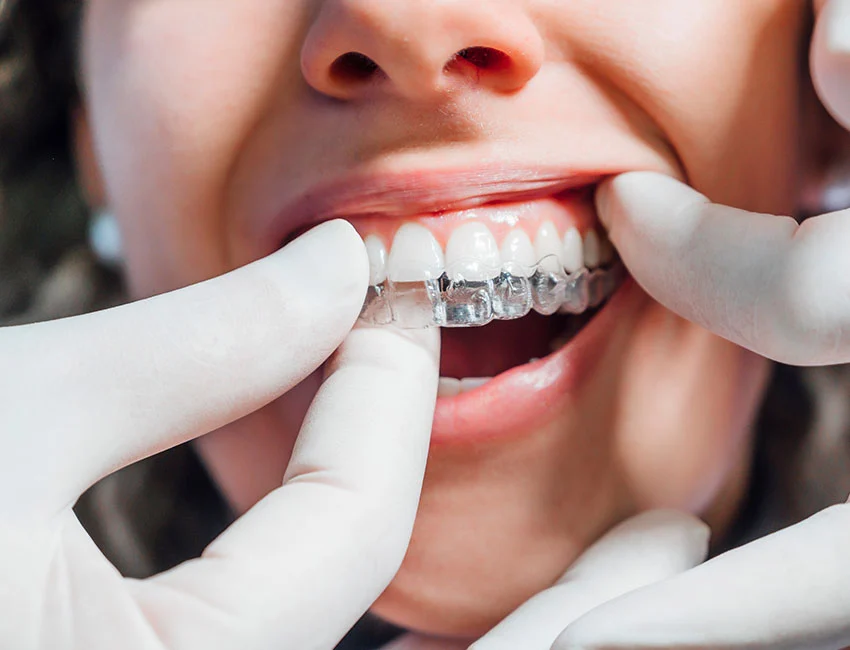
- Clear Aligners: Transparent, removable orthodontic appliances that gradually straighten teeth.
- Invisalign: A popular brand of clear aligners.
- Lingual Braces: Braces that are attached to the back (tongue side) of the teeth.
- Retainers: Removable or fixed appliances worn after orthodontic treatment to maintain the new tooth position.
Treatment Process
- Archwire: A metal wire that is attached to the brackets and guides the teeth into their new alignment.
- Bands: Metal rings that are cemented around the back teeth (molars) to provide anchorage for the appliance.
- Brackets: Small attachments that are bonded to the teeth and hold the archwire in place.
- Cephalometric X-ray: An X-ray of the head that shows the relationship between the teeth, jaws, and skull.
- Elastic Ties (Ligatures): Small rubber bands or thin wires that hold the archwire in the bracket slots.
- Interproximal Reduction (IPR): Removing a small amount of enamel between teeth to create space for alignment.
- Malocclusion: Misalignment of the teeth or jaws.
- Occlusion: The way the upper and lower teeth fit together when the mouth is closed.
- Orthodontist: A dentist who specializes in the diagnosis, prevention, and treatment of dental and facial irregularities.
- Panoramic X-ray: An X-ray that provides a wide view of the entire mouth, including the teeth, jawbones, and sinuses.
- Retention: The period after active orthodontic treatment when retainers are worn to maintain the new tooth position.
Common Orthodontic Issues
- Crowding: When there is not enough space in the jaw for all the teeth to align properly.
- Crossbite: When the upper teeth bite inside the lower teeth.
- Open Bite: When the upper and lower front teeth do not overlap when the mouth is closed.
- Overbite: When the upper front teeth overlap the lower front teeth excessively.
- Overjet: When the upper front teeth protrude horizontally over the lower front teeth.
- Spacing: Gaps or spaces between teeth.
- Underbite: When the lower front teeth protrude in front of the upper front teeth.
- Braces
- Fixed orthodontic appliances consisting of brackets, bands, and wires that are attached to the teeth to move them into proper alignment.
- Clear Aligners
- Transparent, removable orthodontic appliances that gradually straighten teeth.
- Lingual Braces
- Braces that are attached to the back (tongue side) of the teeth.
- Retainers
- Removable or fixed appliances worn after orthodontic treatment to maintain the new tooth position.
- Archwire
- A metal wire that is attached to the brackets and guides the teeth into their new alignment.
- Bands
- Metal rings that are cemented around the back teeth (molars) to provide anchorage for the appliance.
- Brackets
- Small attachments that are bonded to the teeth and hold the archwire in place.
- Cephalometric X-ray
- An X-ray of the head that shows the relationship between the teeth, jaws, and skull.
- Elastic Ties (Ligatures)
- Small rubber bands or thin wires that hold the archwire in the bracket slots.
- Interproximal Reduction (IPR)
- Removing a small amount of enamel between teeth to create space for alignment.
- Malocclusion
- Misalignment of the teeth or jaws.
- Occlusion
- The way the upper and lower teeth fit together when the mouth is closed.
- Orthodontist
- A dentist who specializes in the diagnosis, prevention, and treatment of dental and facial irregularities.
- Panoramic X-ray
- An X-ray that provides a wide view of the entire mouth, including the teeth, jawbones, and sinuses.
- Retention
- The period after active orthodontic treatment when retainers are worn to maintain the new tooth position.
- Crowding
- When there is not enough space in the jaw for all the teeth to align properly.
- Crossbite
- When the upper teeth bite inside the lower teeth.
- Open Bite
- When the upper and lower front teeth do not overlap when the mouth is closed.
- Overbite
- When the upper front teeth overlap the lower front teeth excessively.
- Overjet
- When the upper front teeth protrude horizontally over the lower front teeth.
- Spacing
- Gaps or spaces between teeth.
- Underbite
- When the lower front teeth protrude in front of the upper front teeth.